Choosing a hosting plan at the enterprise tier isn’t just about raw specifications — CPU cores and RAM are table stakes. What separates enterprise-grade hosting from the tier below it is the operational infrastructure: how IP reputation is managed, Hostinger Cloud Enterprise features, how recoverable the site is after a problem, how content is delivered globally, and what security layers are active by default. This review breaks down each of those four pillars specifically on Hostinger Cloud Enterprise hosting — what each feature actually provides and why it matters at this resource level.
Overview: Cloud Enterprise Specifications
Before the feature deep-dive, the resource foundation that makes each feature meaningful:
| Specification | Cloud Enterprise |
|---|---|
| CPU Cores | 6 dedicated cores |
| RAM | 12 GB dedicated |
| NVMe Storage | 300 GB |
| Bandwidth | Unlimited |
| Websites | Up to 100 |
| Starting Price | ~$29.99/mo (48-mo term) |
Always check the current live Cloud Enterprise pricing before checkout — seasonal promotions may apply.
Feature 1: Dedicated IP Address — What It Provides at Enterprise Scale
A dedicated IP address is included as standard on all Hostinger Cloud Enterprise plans. At enterprise scale, this feature carries operational weight in three specific areas:
Email Deliverability at Volume
Enterprise businesses send email at volume — transactional order confirmations, shipping notifications, invoice emails, Hostinger Cloud Enterprise features, marketing newsletters, and automated triggered sequences. All of this outgoing email carries your IP address’s reputation. On shared hosting, if any account on the same IP sends spam or gets flagged, every account on that IP faces potential deliverability consequences. A dedicated IP eliminates this exposure entirely: your sending reputation is built and maintained by your domain’s activity alone, not influenced by neighbouring accounts. For a business sending thousands of transactional emails monthly, this isn’t a nice-to-have — it’s the baseline requirement for reliable inbox delivery.
SSL Configuration Reliability
While modern SNI (Server Name Indication) technology allows HTTPS on shared IPs, certain enterprise corporate environments — including legacy firewalls, older mobile devices, and specific network configurations — handle SSL more reliably with a dedicated IP. For enterprise sites whose visitor base includes corporate employees accessing through managed IT environments, dedicated IP reduces compatibility friction.
Direct Server Access During DNS Transitions
A dedicated IP allows direct access to your server via IP address, independent of DNS resolution. During domain migrations,Hostinger Cloud Enterprise features, DNS propagation periods, or when verifying server configurations before making them live, direct IP access eliminates the propagation delay entirely — useful at enterprise scale where downtime during transitions has direct revenue impact.
Dedicated IP vs Shared IP: The Practical Difference
| Aspect | Shared IP (Standard Shared Hosting) | Dedicated IP (Cloud Enterprise) |
|---|---|---|
| Email reputation | Affected by all accounts on IP | Determined solely by your domain |
| SSL compatibility | Relies on SNI support | Works on all SSL configurations |
| Direct server access | Domain-dependent | Available via IP at any time |
| Typical add-on cost elsewhere | $1–$5/mo extra | Included as standard |
Feature 2: Daily Backups with On-Demand Snapshots on Cloud Enterprise
Cloud Enterprise includes two layers of backup protection that work together:
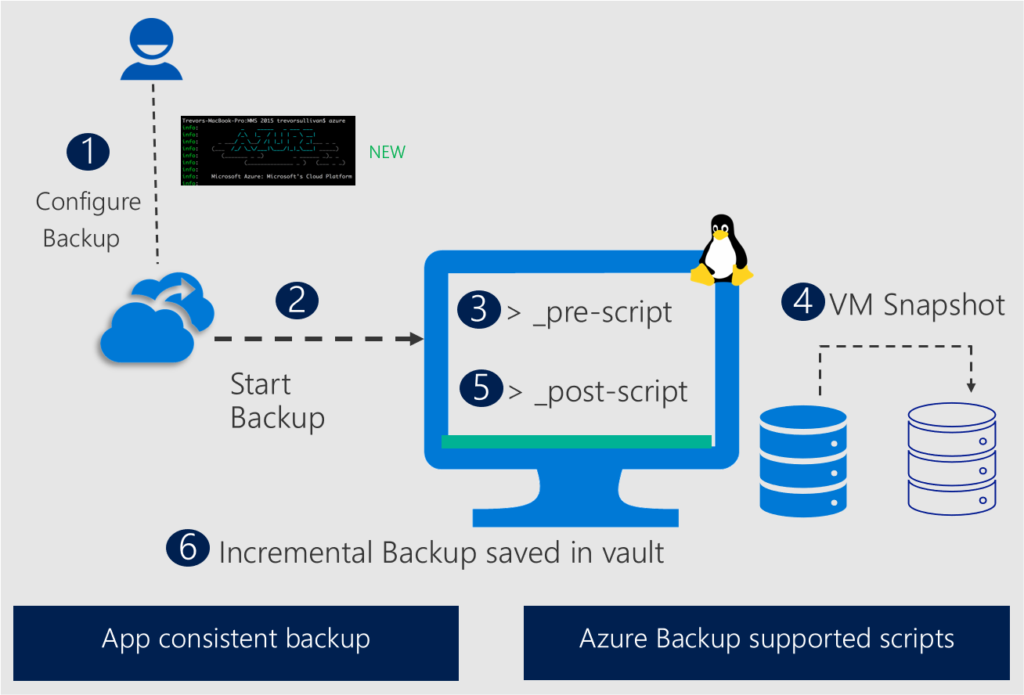
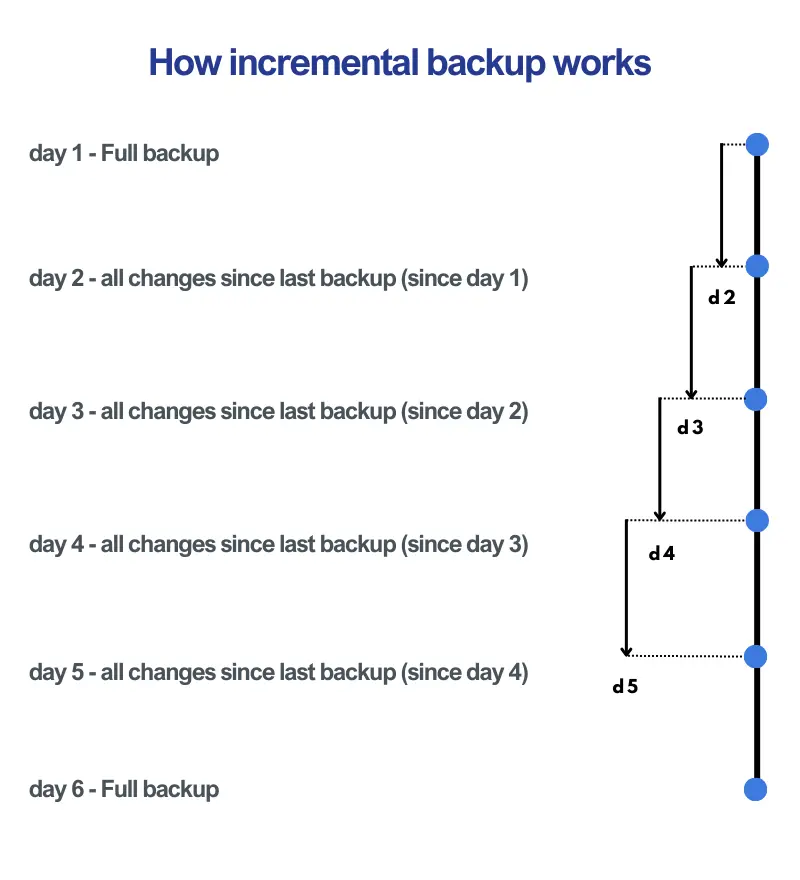
Daily Automatic Backups
A complete site backup runs automatically every 24 hours — files, databases, configurations, and email data. These backups are stored independently of your hosting environment and accessible through hPanel for self-service restoration. The 24-hour maximum data loss window (compared to 6 days on weekly backup plans) is the operational minimum for any enterprise site processing daily customer activity.
On-Demand Backup Capability
Beyond the daily automatic schedule, Cloud Enterprise allows manually triggered backups at any time from hPanel. The practical applications at enterprise scale:
- Create a snapshot immediately before deploying a WooCommerce plugin update that touches the payment flow
- Snapshot before a major content migration or product catalog import
- Backup before a developer makes significant theme or code changes
- Create a clean restore point immediately after a successful site launch or major feature deployment
On-demand backups transform the recovery question from “how much did we lose since the last scheduled backup?” to “how many minutes before the problem did we snapshot?” For an enterprise site where an hour of checkout downtime during a sales campaign has quantifiable revenue cost, that precision matters.
Backup Comparison Across Hostinger’s Tier Structure
| Plan | Backup Frequency | On-Demand | Max Data Loss Window |
|---|---|---|---|
| Premium (Shared) | Weekly | No | Up to 6 days |
| Business (Shared) | Daily | No | Under 24 hours |
| Cloud Startup | Daily | No | Under 24 hours |
| Cloud Professional | Daily | Yes | Minutes (with snapshot) |
| Cloud Enterprise | Daily | Yes | Minutes (with snapshot) |
Feature 3: Built-In CDN — What It Does and How It Works
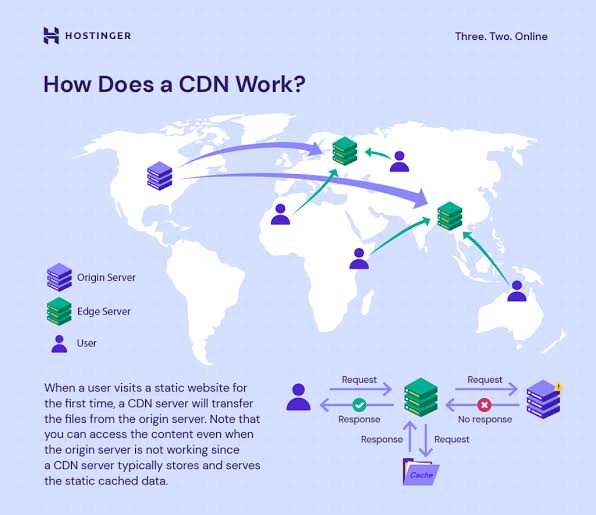
The CDN included with Cloud Enterprise hosting is built directly into hPanel and activated per-website with a single click. Here’s what it actually does:
How CDN Works in Practice
A Content Delivery Network maintains copies of your site’s static assets — images, CSS files, JavaScript files, fonts — on edge servers distributed across multiple global locations. When a visitor loads your site, these cached assets are served from whichever edge server is geographically closest to them, rather than travelling from your hosting server’s single location. The result:
- Reduced Time to First Byte for international visitors
- Faster Largest Contentful Paint — a direct Google Core Web Vitals ranking signal
- Reduced load on your origin server, since cached requests are handled at the edge
- More resilient delivery during traffic spikes — edge servers absorb load that would otherwise hit your origin
CDN Value at Enterprise Scale
For enterprise sites with geographically distributed audiences — international eCommerce stores, global membership platforms, multi-language corporate sites — the CDN’s impact is amplified. A visitor in Singapore loading content from an edge server in Singapore experiences dramatically lower latency than loading from a European origin server. Independent testing shows Hostinger’s infrastructure achieving a 136ms average global server response time across 8 data center locations — the CDN layer contributes directly to this global performance figure.
What CDN Would Cost Separately
Third-party CDN services — Cloudflare Pro at $20/month, KeyCDN at $0.04/GB, BunnyCDN at $0.01/GB — add to your monthly infrastructure bill. Having it bundled into Cloud Enterprise’s flat monthly rate removes usage-based billing uncertainty and simplifies the vendor stack.
Feature 4: Advanced Security at Cloud Enterprise Level
Cloud Enterprise includes a layered security stack that covers both infrastructure-level and application-level threats:
Network-Level DDoS Protection
DDoS (Distributed Denial of Service) attacks target sites by overwhelming their server with traffic. Hostinger’s network-level DDoS protection operates at the infrastructure layer — traffic is filtered before it reaches your server, meaning your dedicated CPU and RAM aren’t exhausted by malicious requests rather than legitimate visitors. At enterprise scale, where traffic volumes are already high, infrastructure-level DDoS protection is the only defence that doesn’t create false positives affecting legitimate users.
Malware Scanner and Vulnerability Monitoring
Active malware scanning and vulnerability monitoring are included as standard — not as an add-on service. The scanner checks for known malware signatures and suspicious code patterns across your hosted files, with alerts generated when potential threats are detected before they impact visitors.
Unlimited Free SSL Certificates
Every domain and subdomain on the Cloud Enterprise account receives its own SSL certificate — auto-installed and auto-renewed for the life of the hosting plan. At 100-website capacity, this means every site in the account portfolio is SSL-protected without any per-certificate billing or manual renewal management.
WordPress Staging Environment
Security updates are one of the most common sources of WordPress site breaks. The staging environment included on Cloud Enterprise allows testing every WordPress core update, plugin security patch, and theme update on a complete copy of the live site before deploying to production — eliminating the risk of a security update inadvertently breaking live functionality.
Complete Feature Summary
- 6 dedicated CPU cores
- 12 GB dedicated RAM
- 300 GB NVMe SSD storage
- Dedicated IP address — included as standard
- Daily automatic backups + on-demand snapshots
- Built-in CDN — one-click activation per site
- DDoS protection at network level
- Malware scanner and vulnerability monitoring
- Unlimited free SSL certificates — permanent, auto-renewed
- WordPress staging environment
- Object Cache
- Free domain name (1 year)
- Free email mailboxes (year 1)
- Priority 24/7 expert support
- 99.9% uptime guarantee
- 30-day money-back guarantee
Frequently Asked Questions
Does Cloud Enterprise include a dedicated IP as standard?
Yes. A dedicated IP address is included in the flat monthly rate — not an add-on. This covers all sites hosted under the account.
How do on-demand backups differ from daily automatic backups on Cloud Enterprise?
Daily automatic backups run on a 24-hour schedule without manual action. On-demand backups are manually triggered at any time from hPanel — useful immediately before an update, migration, or significant configuration change. Both are included as standard on Cloud Enterprise.
Does the CDN cover all websites on the Cloud Enterprise account?
Yes. The CDN can be enabled per-website with a single click in hPanel — there’s no per-site limit or additional billing for enabling it across multiple sites on the account.
Is DDoS protection active by default or does it need to be configured?
DDoS protection operates at the network infrastructure level — it’s active by default for all Cloud Enterprise accounts without requiring manual configuration.
Final Verdict
The four features reviewed here — dedicated IP, daily backups with on-demand snapshots, CDN, and multi-layer security — aren’t marketing additions to an entry-level plan. On Hostinger Cloud Enterprise hosting, each one addresses a specific operational risk that enterprise-scale websites face: email deliverability at volume, data loss precision, global performance consistency, and active threat mitigation. Having all four bundled into a flat monthly rate — alongside 12 GB dedicated RAM and 300 GB NVMe storage — at approximately $29.99/month makes Cloud Enterprise one of the most completely-equipped managed cloud plans available at this price point. Check Hostinger’s current Cloud Enterprise pricing here and see whether this feature set matches your enterprise site’s operational requirements.
You can also read: Hostinger Cloud Professional Hosting vs VPS Hosting: Which Is Better for Growing Businesses?