Starting a website on a hosting plan that costs $36/year is easy. The harder question is whether that same provider can still serve the website five years later when traffic has grown, Hostinger hosting review, business stakes are higher, and the site has become a meaningful revenue asset. This review examines Hostinger specifically through the lens of long-term trust and growth — not just what it costs in year one, but whether the infrastructure, support, and upgrade path hold up as a website matures.
Why Long-Term Hosting Decisions Are Different From Short-Term Ones
Most hosting reviews evaluate a provider for a single use case at a single point in time. Long-term website growth adds complexity that those reviews don’t address:
- Migration risk: Every time you switch hosting providers, there’s downtime risk, data migration complexity, and potential SEO disruption from temporary performance changes
- Renewal rate reality: The promotional price is what you pay in year one; the renewal rate is what you pay for years 2, 3, and beyond
- Upgrade path continuity: A site that outgrows its hosting tier needs to upgrade — ideally within the same provider to avoid migration
- Provider stability: A company that gets acquired, changes ownership, or degrades service quality midway through your site’s growth disrupts more than just hosting
Each of these questions has a concrete answer for Hostinger. Here’s what the evidence shows.
Hostinger’s Track Record: Company Background and Stability
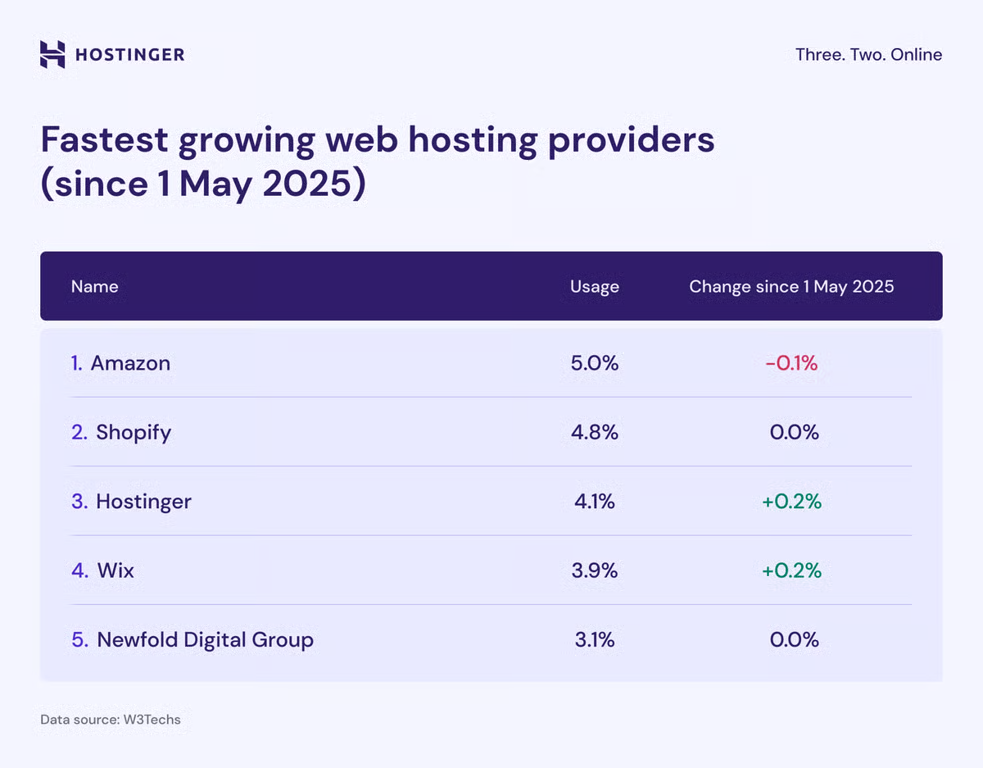
Hostinger was founded in 2004 and has grown to host over 3 million websites across 178 countries — making it one of the largest independent hosting providers globally. It operates its own data centers rather than reselling third-party infrastructure, Hostinger hosting review, which gives it direct control over the hardware and network quality that determines performance.
Unlike some hosting conglomerates that acquire and bundle multiple brands (EIG, now Newfold Digital, owns Bluehost, HostGator, and others — a model that has historically led to service degradation after acquisition), Hostinger remains independently operated under its original brand. That operational continuity matters for long-term reliability — the infrastructure and support culture you’re evaluating today is the one likely to be in place in three years.
The Renewal Rate: What Long-Term Hosting Actually Costs
The single most important number for long-term hosting cost isn’t the promotional price — it’s the renewal rate. Here’s the honest picture for Hostinger’s main plans:
| Plan | Promo Price | Renewal Rate | Increase | Annual Renewal Cost |
|---|---|---|---|---|
| Premium | $2.99/mo | $10.99/mo | ~267% | ~$132/yr |
| Business | $4.49/mo | $16.99/mo | ~278% | ~$204/yr |
| Cloud Startup | $7.99/mo | ~$25.99/mo | ~225% | ~$312/yr |
| Cloud Professional | $15.99/mo | Standard rate | Varies | Check at renewal |
Hostinger’s renewal increases are significant — as they are across the industry. The mitigation strategy is the same for all providers: choose longer billing terms upfront. The 48-month plan locks in the promotional rate for four years, deferring the renewal increase until 2029–2030. Hostinger’s current plan pricing here shows all term options — comparing the 12-month and 48-month rates makes the long-term cost difference clear before you commit.
The Upgrade Path: Growing Within Hostinger Without Migrating
This is where Hostinger makes a strong case for long-term use. The tier structure allows a website to grow from first post to enterprise scale entirely within one provider:
| Growth Stage | Recommended Plan | Traffic Capacity | Monthly Cost |
|---|---|---|---|
| New blog / portfolio | Premium | ~25,000/mo | $2.99 |
| Business site / small eCommerce | Business | ~50,000/mo | $4.49 |
| Growing WooCommerce / membership | Cloud Startup | ~100,000–200,000/mo | $7.99 |
| High-traffic business site | Cloud Professional | ~200,000+/mo | $15.99 |
| Large enterprise / agency | Cloud Enterprise | ~300,000+/mo | $29.99 |
Every upgrade between these tiers is handled through hPanel with prorated billing — your site stays live, your DNS settings don’t change, Hostinger hosting review, your WordPress installation remains intact. No migration, no downtime, no SEO disruption. For a website owner focused on content or business rather than technical maintenance, this upgrade-in-place capability is one of Hostinger’s most practical long-term advantages.
Performance Longevity: Does Hostinger Stay Fast as Sites Grow?
Independent 2026 benchmark data gives a meaningful answer. Hostinger ranked second overall in AdwaitX’s 365-day continuous performance study among 20+ hosting providers — a full year of testing, not a single-point snapshot. The TTFB has improved nearly 2× in the six months between December 2025 and June 2026 testing by Cybernews (from 1.208s to 0.707s), indicating active infrastructure investment rather than static maintenance.
Key verified 2026 performance benchmarks:
- 365-day combined ranking: 2nd among 20+ providers (AdwaitX)
- TTFB: 0.707 seconds (Cybernews, June 2026)
- Global average server response: 136ms across 8 data centers
- Verified uptime: 99.94–99.96% across multiple independent monitoring studies
- WordPress load time: 1.2 seconds average (FixMyPageSpeed, May 2026)
These results aren’t new — they reflect multi-year infrastructure investment. For a site whose long-term growth depends on Google rankings (which use Core Web Vitals and TTFB as ranking signals), Hostinger’s performance is consistently above what its price point would suggest.
Support Quality for Long-Term Use
Short-term hosting decisions rarely stress-test support. Long-term website ownership inevitably does. A plugin breaks something during an update. A database table gets corrupted. A new WordPress version creates a conflict. The question isn’t whether these things will happen — they will. The question is how quickly and effectively they’re resolved.
Hostinger’s 24/7 live chat support is available on all plan tiers — it’s not reserved for premium tiers. Independent review aggregates consistently rate Hostinger’s support above average for response speed and quality, Hostinger hosting review, particularly for non-technical questions. For Cloud Professional and Cloud Enterprise tiers, priority support queuing means tickets from those accounts are handled ahead of standard tier requests.
What Hostinger doesn’t offer: phone support. For businesses whose SLA requirements include phone escalation, that’s a genuine limitation worth noting before committing to a long-term plan.
Data Protection for Long-Term Peace of Mind
Long-term websites accumulate value that’s difficult to rebuild — years of blog posts, customer order histories, email subscriber lists, media libraries. The backup policy directly determines how much of that value can be recovered after a problem:
- Premium: Weekly automatic backups — up to 6 days of data loss possible
- Business and Cloud Startup: Daily automatic backups — under 24 hours maximum data loss
- Cloud Professional and Cloud Enterprise: Daily backups plus on-demand snapshots — recovery point can be minutes before a problem
For any website that’s been running for more than a year and has accumulated meaningful content or customer data, daily backups are the minimum responsible protection. The $18/year upgrade from Premium to Business is the most cost-effective data protection decision available on Hostinger’s plan structure.
Pros and Cons for Long-Term Use
Pros
- Complete upgrade path from entry to enterprise without changing providers or migrating
- Independently owned and operated — no acquisition-driven service changes
- Top-2 independent performance benchmarks consistently across extended monitoring periods
- Active infrastructure investment evident in improving TTFB trajectory
- 48-month billing terms lock in promotional pricing for 4 years
- All upgrades handled in-place through hPanel — no downtime or migration risk
Cons
- Renewal rate increases are significant across all plans — budget for year-2 rates from day one
- No phone support at any tier — chat-only may not meet all business SLA requirements
- Premium tier’s weekly backups are insufficient for sites accumulating daily data
- CDN not available on the entry Premium plan
Frequently Asked Questions
Is Hostinger reliable for long-term use?
Based on independent 2026 monitoring data — 99.94–99.96% uptime across multiple extended studies, second-place in 365-day performance testing — yes. The company has operated since 2004 under consistent independent ownership, Hostinger hosting review, and its infrastructure benchmarks have improved over the past six months, indicating active investment rather than maintenance mode.
What happens to my site when I outgrow my plan?
You upgrade through hPanel — no migration, no downtime, no DNS changes. Your site stays live throughout the upgrade process. Hostinger calculates prorated billing for your remaining term automatically.
Is Hostinger’s renewal rate competitive?
Hostinger’s renewal increases are comparable to industry norms — most hosting providers use promotional-to-standard pricing models. Compared to SiteGround (501% renewal increase), Hostinger’s increases are more moderate. The most effective mitigation is choosing the 48-month plan to lock in the promotional rate for four years.
What’s the most important plan feature for long-term websites?
Daily automatic backups — the feature that determines how much of your accumulated content, orders, and customer data is recoverable after a problem. For any established website, the Business plan’s daily backups (versus Premium’s weekly) are worth the $18/year difference.
Final Verdict: Can You Trust Hostinger for Long-Term Website Growth?
The evidence supports yes — with clear-eyed awareness of the renewal rate. Hostinger’s upgrade path from a $36/year blog to a $360/year enterprise cloud platform, its consistent top-2 independent performance rankings, its active infrastructure investment trajectory, Hostinger hosting review, and its in-place upgrade process without migration risk make it one of the more compelling long-term hosting platforms available at any budget level.
The renewal rate is the honest caveat: budget for it from day one, choose the longest billing term you can commit to, and set a calendar reminder 60 days before your term expires to reassess options. With those precautions in place, Hostinger is a hosting platform genuinely worth building a long-term website on. Check current Hostinger plan pricing here and choose the tier and term that fits where your website is today and where it’s headed.
You can also read: Hostinger Business Hosting Pricing Guide 2026: $54, $96 and $195 Plans Compared.