If your website has outgrown shared hosting — slow load times during traffic spikes, occasional “database connection” errors, or you’re simply tired of sharing server resources with hundreds of strangers — you’re in the right place. This review breaks down exactly what Hostinger Cloud Startup hosting costs, what specs you actually get with cloud hosting pricing, and how it stacks up against the alternatives people usually compare it to. Also with cloud hosting pricing.
No vague marketing language — just real specifications, real pricing, and a straight answer on whether it’s worth the upgrade.
What Is Hostinger Cloud Startup Hosting?
Cloud Startup sits between standard shared hosting and a full VPS in Hostinger’s lineup. Instead of sharing cloud hosting pricing in CPU and RAM with other accounts on the same server, you get dedicated resources that aren’t affected by neighboring websites — while still keeping the simplicity of a fully managed control panel (hPanel) instead of needing server administration skills.
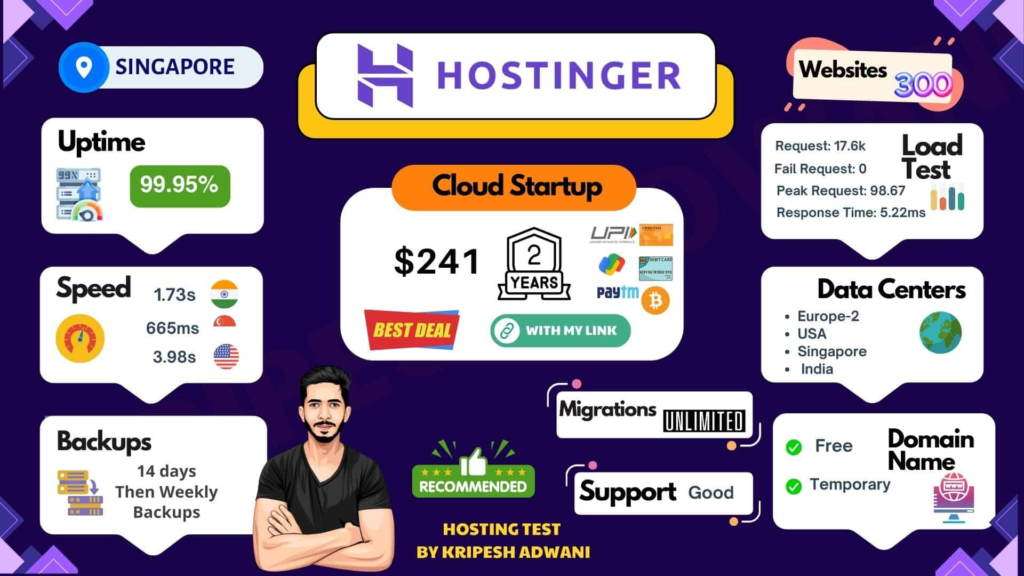
In short: wyou get VPS-level performance isolation with the ease-of-use of regular shared hosting. That’s exactly why Hostinger Cloud Hosting has become a popular middle step for growing blogs, cloud hosting pricing, WooCommerce stores, and agencies managing multiple client sites.
Hostinger Cloud Startup: Full Specifications
Here’s exactly what you’re getting with the entry-level Cloud Startup plan:
Performance Specifications
- 4 CPU cores dedicated to your account, not shared with other users
- 4 GB RAM for consistent performance even during traffic spikes
- 100 GB NVMe SSD storage — significantly faster than traditional SATA SSDs used by many budget competitors
- 100 PHP workers, allowing far more simultaneous visitors than shared hosting plans (which typically cap at 40-60)
- 2,000,000 inodes (file and folder limit) — more than enough for media-heavy sites or large WooCommerce catalogs
- Unlimited bandwidth, so traffic surges never trigger overage charges
What’s Included for Free
- Free domain name for the first year (a $9.99 value)
- Unlimited free SSL certificates, auto-installed at signup
- Free email mailboxes tied to your domain, included for the first year
- Free CDN integrated directly into hPanel — no third-party setup required
- Dedicated IP address — important for email deliverability and certain SSL/security configurations
- Daily automatic backups (a major step up from the weekly backups on entry-level shared plans)
- Priority 24/7 expert support, with faster response queues than standard shared hosting tickets
- Host up to 100 websites on a single plan
- 99.9% uptime guarantee
- 30-day money-back guarantee
If you’re managing several client sites or running a content network, that combination of 100 websites, daily backups, and dedicated resources on Hostinger’s Cloud Startup plan is genuinely hard to match at this price point.
Hostinger Cloud Startup Pricing Breakdown
Like all of Hostinger’s plans, the monthly rate drops the longer you commit upfront. Here’s the real cost across each billing term:
| Billing Term | Price Per Month | Total Paid Upfront | Renewal Rate |
|---|---|---|---|
| 48 months | $7.99/mo | ~$383.52 | $25.99/mo |
| 24 months | ~$9.99/mo | ~$240 | $25.99/mo |
| 12 months | ~$11.99–$13.99/mo | ~$144–$168 | $25.99/mo |
Hostinger frequently runs seasonal promotions on top of these standard rates, so it’s worth checking the current live price for Cloud Startup hosting before checkout — you may catch an additional discount beyond what’s quoted here.
Compared to the jump straight to VPS hosting (which requires server management knowledge), Cloud Startup gives you most of the performance benefit while keeping the same beginner-friendly hPanel dashboard you’d get on shared hosting.
Hostinger Cloud Startup vs Other Cloud Hosting Options
| Feature | Hostinger Cloud Startup | DigitalOcean Basic Droplet | Bluehost Cloud | SiteGround GrowBig |
|---|---|---|---|---|
| Starting Price | $7.99/mo (48-mo term) | ~$6/mo (hourly billing) | ~$16.99/mo | ~$6.99/mo (promo) |
| Managed Hosting | Yes, fully managed | No, self-managed | Yes | Yes |
| Free Domain | Yes (1 year) | No | Yes | No |
| Dedicated IP | Yes, included | Yes | Add-on | Add-on on lower tiers |
| Daily Backups | Yes, included | Manual/paid snapshots | Yes | Yes |
| CDN Included | Yes, built-in | No (separate setup) | Yes | Yes |
| Storage | 100 GB NVMe | 25 GB SSD | ~100 GB | ~40 GB SSD |
| Technical Skill Needed | None (managed) | High (self-managed) | Low | Low |
Competitor pricing fluctuates with ongoing promotions — figures above reflect approximate standard published rates at the time of writing.
The clearest advantage Hostinger’s Cloud Startup plan holds over raw cloud providers like DigitalOcean is the managed layer — you get cloud-grade hardware without needing to configure a server yourself. Against fellow managed hosts like Bluehost and SiteGround, Hostinger wins primarily on what’s bundled in free versus paid as an add-on.
Performance: Why Cloud Startup Outperforms Shared Hosting
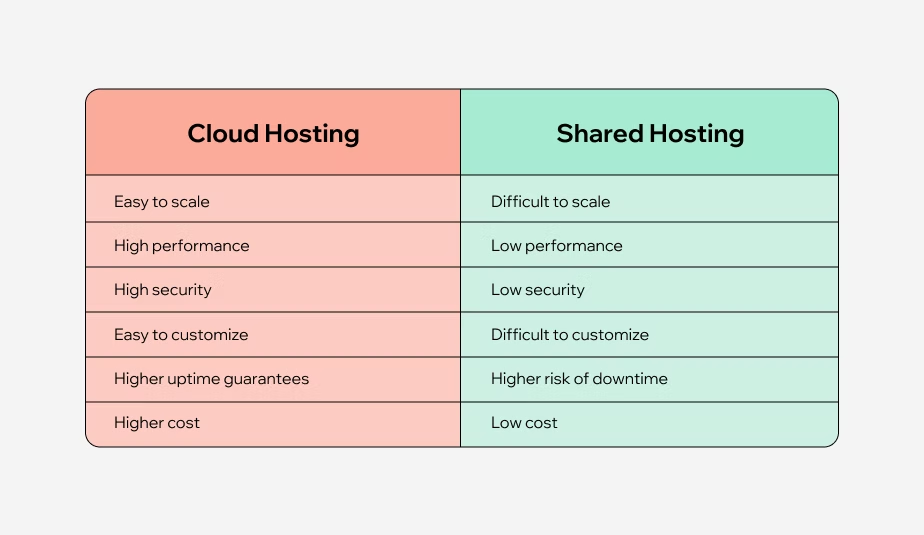
The biggest real-world difference between shared hosting and Cloud Startup isn’t marketing — it’s resource isolation. On shared hosting, a traffic spike on another account on your server can slow your site down. On Cloud Startup, your 4 CPU cores and 4 GB RAM are reserved exclusively for you.
Specific performance advantages include:
- 100 PHP workers vs roughly 40-60 on entry-level shared plans — meaning far more visitors can load your site simultaneously without slowdown
- NVMe SSD storage, which delivers significantly faster read/write speeds than the standard SSDs used on cheaper plans
- Built-in CDN, which Hostinger reports can improve site performance by roughly 40% by serving cached content from servers closer to each visitor
- Resolved database timeout issues — sites running WooCommerce, WPML, or heavy page builders often hit “Error Establishing Database Connection” on shared hosting during traffic spikes; Cloud Startup’s dedicated resources largely eliminate this
If you’ve ever had a sale day or viral post crash your shared hosting site, this is the exact problem upgrading to Cloud Startup hosting is designed to solve.
Who Should Choose Cloud Startup Hosting?
- Growing blogs and content sites that have outgrown the visitor capacity of shared hosting (roughly 25,000+ monthly visitors)
- WooCommerce store owners who need reliable performance during sales, restocks, or ad-driven traffic spikes
- Freelance developers and agencies managing multiple client websites who need dedicated resources and the ability to host up to 100 sites on one plan
- Anyone needing a dedicated IP address for email deliverability, custom SSL setups, or specific application requirements
If you’re just launching your very first website with minimal traffic expectations, Hostinger’s entry-level shared Premium plan may be the more cost-effective starting point. But once you’re seeing consistent traffic or running an online store, Cloud Startup hosting is where most growing sites land next.
Pros and Cons
Pros
- Dedicated CPU, RAM, and resources not shared with other accounts
- Daily backups, included free — a real upgrade from weekly backups on shared plans
- Free domain, SSL, dedicated IP, and CDN all bundled in at no extra cost
- 100 PHP workers significantly reduce slowdowns during traffic spikes
- Fully managed — no server administration knowledge required
- Host up to 100 websites on a single plan
- 30-day money-back guarantee
Cons
- Renewal pricing increases substantially after the first promotional term — budget for the $25.99/mo standard rate
- No phone support — support is chat-based, though typically fast to respond
- Lowest advertised rate requires a 48-month upfront commitment
- Still a managed environment, so it lacks the root-level control of a true VPS
How to Get Started With Hostinger Cloud Startup Hosting
- Open Hostinger’s Cloud Startup plan page and select your preferred billing term
- Claim your free domain name during checkout, or transfer an existing one
- If migrating from another host, request Hostinger’s free, no-downtime migration service
- Set up your email mailboxes and confirm your dedicated IP address in hPanel
- Enable the built-in CDN with one click for an immediate performance boost
- Your SSL certificate installs automatically — your site is secured from day one
Frequently Asked Questions
What’s the difference between Hostinger Cloud Startup and shared hosting?
Shared hosting pools CPU and RAM across multiple accounts on the same server, meaning your site’s performance can be affected by others. Cloud Startup gives you dedicated CPU cores and RAM exclusively for your account, plus daily backups, a dedicated IP address, and significantly more PHP workers.
How much does Hostinger Cloud Startup cost?
The promotional rate starts at $7.99/month on a 48-month billing term, renewing at $25.99/month afterward. Shorter 12 and 24-month terms are available at a higher monthly rate. Pricing can shift with seasonal promotions, so it’s worth confirming the current rate before purchase.
Does Cloud Startup include a free domain and SSL certificate?
Yes. You get a free domain for the first year and unlimited free SSL certificates, automatically installed with no manual setup required.
Is Cloud Startup good for WooCommerce stores?
Yes, it’s one of Hostinger’s most recommended tiers for WooCommerce, particularly for stores running over 500 products, using extensions like Subscriptions, or expecting traffic spikes from ad campaigns or sales events.
How many websites can I host on one Cloud Startup plan?
Up to 100 separate websites on a single Cloud Startup account — useful for agencies, freelancers, or anyone managing a portfolio of smaller sites.
Do I need technical skills to use Cloud Startup hosting?
No. Despite the performance similarities to a VPS, Cloud Startup is fully managed through Hostinger’s hPanel dashboard, with one-click WordPress installs and no server administration required.
Is there a dedicated IP address included?
Yes, a dedicated IP address is included at no extra cost, which helps with email deliverability and certain SSL or security configurations that shared IPs can complicate.
Final Verdict: Is Hostinger Cloud Startup Worth It?
For websites that have outgrown shared hosting — whether that’s a growing blog, an active WooCommerce store, or an agency managing multiple client sites — Cloud Startup delivers a genuine performance upgrade without forcing you into full VPS server management. Dedicated CPU and RAM, daily backups, a free CDN, and a dedicated IP address are the kind of features that typically cost extra at other managed hosts, all included here as standard.
If database errors, slow load times during traffic spikes, or shared-resource limitations have been holding your site back, this is the upgrade built specifically to solve that. Explore Hostinger’s current Cloud Startup pricing here and see whether it’s the right next step for your website.