Most people shop for hosting one year at a time, then get hit with Hostinger 4 year hosting plan and renewal bill that’s three or four times higher than what they originally paid. There’s a way around that — and it comes down to a simple math decision most beginners never realize they’re making at checkout.
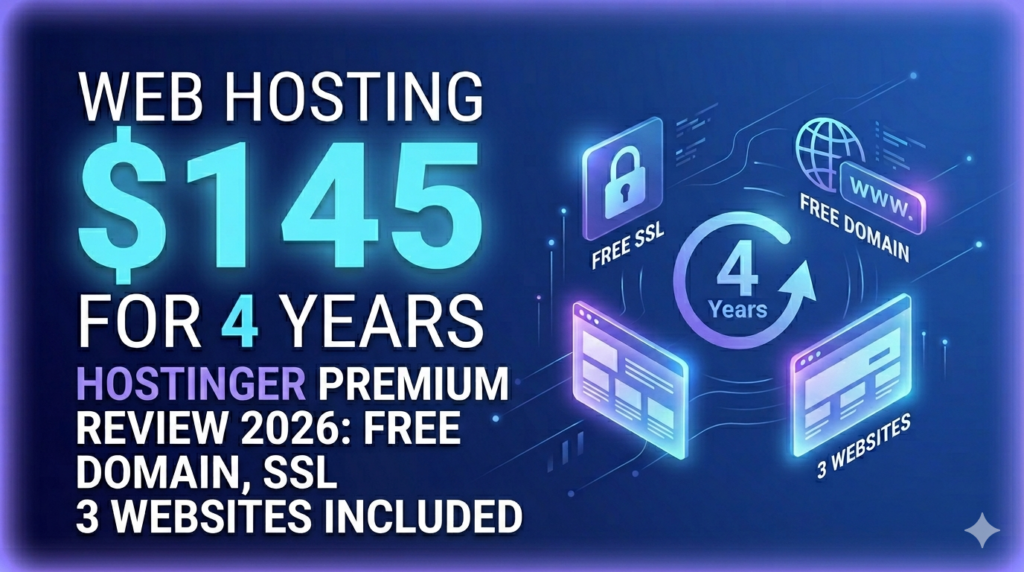
Hostinger’s longest available hosting term locks in four full years of web hosting for roughly $145 total — compared to a regular price of over $575 if you paid the standard renewal rate across the same period. This review breaks down exactly how that math works, what you get for it, and whether committing to four years upfront actually makes sense for your situation.
The Real Math Behind $145 for 4 Years
Here’s exactly where this number comes from. Hostinger’s Premium plan, billed on its longest available 48-month term, runs at approximately $2.99 per month when paid upfront in full.
48 months × $2.99/month = $143.52 — which rounds to roughly $145 for four complete years of hosting.
Compare that to paying the standard renewal rate of $10.99/month across the same 48-month period: that works out to $527.52, and Hostinger itself lists the “regular price” comparison at $575.52 once you factor in the full undiscounted rate structure. Either way you calculate it, the long-term plan represents a genuine saving of roughly 75% compared to paying month-to-month or renewing annually at standard rates.
Promotional pricing shifts with seasonal offers, so it’s worth checking the current live rate for long-term Hostinger hosting before checkout — the exact figure may be even lower depending on active promotions.
What You Actually Get for $145 Across 4 Years of Hostinger Hosting
This isn’t a stripped-down rate with hidden limitations. The 48-month Premium plan includes the exact same feature set as the shorter-term options:
Core Hosting Specifications
- 1 CPU core and 2 GB RAM — suitable for a standard blog, portfolio, or small business site
- 20 GB SSD storage for your files, images, and database
- 400,000 inodes (your file/folder limit)
- 40 PHP workers, supporting multiple simultaneous visitors without slowdown
- Unlimited bandwidth — no overage charges as your traffic grows over the four years
What’s Included at No Extra Cost
- Free domain name for the first year (a $9.99 value)
- Unlimited free SSL certificate, auto-installed at signup
- 2 free email mailboxes per website
- Weekly automatic backups
- Free, no-downtime migration if you’re switching from another host
- Drag-and-drop website builder with built-in AI tools
- 99.9% uptime guarantee
- 24/7 customer support in 8+ languages
- 30-day money-back guarantee
You’re also covered to host up to 3 separate websites on this single plan — useful if you want to build a personal site now and add a second project later without paying for additional hosting.
Why Long-Term Hosting Plans Save You Real Money
This pricing structure isn’t unique to Hostinger — most hosting companies discount longer commitments. But understanding why it works helps you decide if it’s the right move for you specifically.
1. You Lock In Today’s Rate, Not Tomorrow’s
Hosting renewal prices generally only go up over time. Locking in 4 years at the promotional rate protects you from price increases that would otherwise hit you at each annual renewal.
2. You Skip Repeated Renewal Price Jumps
If you renew annually, you pay the discounted rate once, then jump to the standard $10.99/month rate every year after. Over 4 years, those repeated jumps add up to hundreds of dollars more than paying the long-term rate once upfront.
3. One Payment, Four Years of Stability
For bloggers and small businesses, not having to think about hosting renewal, budget approval, or potential price increases for four years removes a recurring administrative task — letting you focus on the actual website instead.
Long-Term Hosting Price Comparison
| Approach | Total Cost Over 4 Years | Effective Monthly Rate |
|---|---|---|
| 48-month plan paid upfront | ~$143.52 | $2.99/mo |
| 24-month plan, renewed once | ~$71.76 + ~$263.76 (renewal) = ~$335.52 | ~$6.99/mo average |
| 12-month plan, renewed 3x | ~$47.88 + 3 × ~$131.88 = ~$443.52 | ~$9.24/mo average |
| Paying standard renewal rate throughout | ~$527.52 | $10.99/mo |
Figures are approximate and based on standard published renewal rates; actual totals may vary slightly with regional pricing and active promotions.
The pattern is clear: the longer your initial commitment, the more total savings you lock in. Choosing the 48-month term at signup, rather than renewing shorter terms repeatedly, is consistently the cheapest path if you’re confident you’ll be running the site for several years regardless.
Hostinger vs Competitors on Long-Term Pricing
| Provider | Longest Term Available | Approx. 4-Year Equivalent Cost | Free Domain Included |
|---|---|---|---|
| Hostinger Premium | 48 months | ~$145 | Yes |
| Bluehost Basic | 36 months (typical max) | ~$280–$380 (extrapolated) | Yes |
| HostGator Hatchling | 36 months (typical max) | ~$330–$430 (extrapolated) | Yes |
| GoDaddy Economy | 36 months (typical max) | ~$280–$380 (extrapolated) | No (extra cost) |
Most competitors cap their longest term at 36 months rather than offering a full 48-month option, so 4-year figures above are extrapolated proportionally for fair comparison. Actual available terms and pricing vary by provider and region.
Few major hosting providers even offer a 48-month commitment option at all — Hostinger’s long-term hosting plans stand out partly because the option exists, not just because the rate is competitive.
Who Should Choose the 4-Year Plan (and Who Shouldn’t)
Good Fit For:
- Established bloggers who know they’ll be running their site long-term and want to lock in maximum savings
- Small business owners who’ve already validated their website’s purpose and don’t expect to switch hosts
- Freelancers and agencies setting up a stable personal brand site they plan to maintain for years
- Anyone prioritizing the lowest possible cost per month over short-term flexibility
Think Twice If:
- You’re testing a brand-new website idea and aren’t sure it will stick around
- You expect to outgrow shared hosting quickly and move to Business or Cloud Startup within the next year
- You’d rather pay slightly more for the flexibility of reassessing your hosting needs annually
If you fall into the second group, a 12-month term might suit you better initially — you can always compare all of Hostinger’s available billing terms here before deciding which commitment level fits your situation.
Pros and Cons of Committing to 4 Years of Hosting Upfront
Pros
- The lowest possible monthly rate available on the Premium plan
- Locks in pricing protection against renewal rate increases for four full years
- One-time payment removes the recurring hassle of annual renewal decisions
- Still includes the full feature set: free domain, SSL, email, weekly backups, and migration
- 30-day money-back guarantee still applies, even on the long-term plan
Cons
- Requires a larger upfront payment, which isn’t ideal for every budget
- Less flexibility if you decide to switch hosting providers or upgrade tiers mid-term
- If your site’s traffic grows significantly, you may need to upgrade plans before the 4 years are up anyway
How to Lock In the 4-Year Hostinger Rate
- Open Hostinger’s Premium hosting page and select the 48-month billing term at checkout
- Claim your free domain name during signup
- Use the one-click WordPress installer or drag-and-drop builder to launch your site
- Set up your 2 free email mailboxes under your new domain
- Your SSL certificate installs automatically — no manual setup required
- Since you won’t need to revisit renewal for four years, set a single calendar reminder near the end of your term to review your options
Frequently Asked Questions
Is $145 for 4 years a real price, or are there hidden fees?
The advertised rate reflects the actual cost of Hostinger’s 48-month Premium plan paid upfront. There are no hidden monthly fees during that term, though you should budget for the free domain’s renewal after its first free year and the standard hosting renewal rate once your 4-year term ends.
What happens after the 4 years are up?
Your plan renews at the standard rate, currently $10.99/month, unless you choose to switch plans, providers, or catch a new promotional offer at that time.
Can I upgrade my plan during the 4-year term if my site grows?
Yes. Hostinger allows you to upgrade to a higher tier like Business or Cloud Startup at any time through hPanel, paying only the prorated difference for your remaining term.
Is committing to 4 years risky if I’m not sure about my website yet?
It carries more commitment risk than shorter terms, yes. Hostinger’s 30-day money-back guarantee provides an initial safety net, but if you’re still validating your website idea, a 12-month term offers more flexibility with a smaller upfront cost.
Does the long-term plan include the same features as shorter terms?
Yes. The feature set — free domain, free SSL, email mailboxes, backups, and support — is identical across all billing terms. Only the price per month and total upfront cost change.
Is this the cheapest way to get Hostinger hosting?
For the lowest possible cost per month, yes — the 48-month term offers Hostinger’s best available rate. Always confirm current pricing, since seasonal promotions can occasionally affect shorter terms as well.
Final Verdict: Should You Commit to 4 Years?
If you’re confident in your website’s direction — an established blog, a validated small business, or a long-term personal brand project — paying $145 upfront for four years of hosting is one of the most cost-effective decisions you can make. You lock in a rate roughly 75% below the standard renewal price, skip multiple rounds of price increases, and still get the complete feature set: free domain, SSL, email, and backups included throughout.
If you’re still testing an idea, a shorter term gives you more flexibility for a slightly higher monthly cost. Either way, the math is worth seeing for yourself — check Hostinger’s current long-term hosting pricing here and decide which commitment level matches where your website is headed.